- Evidence of a real publication
- Metrics that meet your requirements
- A topic and article that fit your brand
A supplier sends a domain, a price and a promise of a permanent guest post. Before paying, use a guest post supplier checklist to confirm who can authorize publication, what the price covers and how you will check delivery. Keep the answers with the quote so both sides can refer to the same agreement.
Start once the website appears suitable. Review topical relevance, recent content, dated Ahrefs DR or Moz DA figures, and available traffic evidence separately using the publisher quality checklist. Those checks help assess the site; they cannot establish that this particular supplier can arrange your placement.
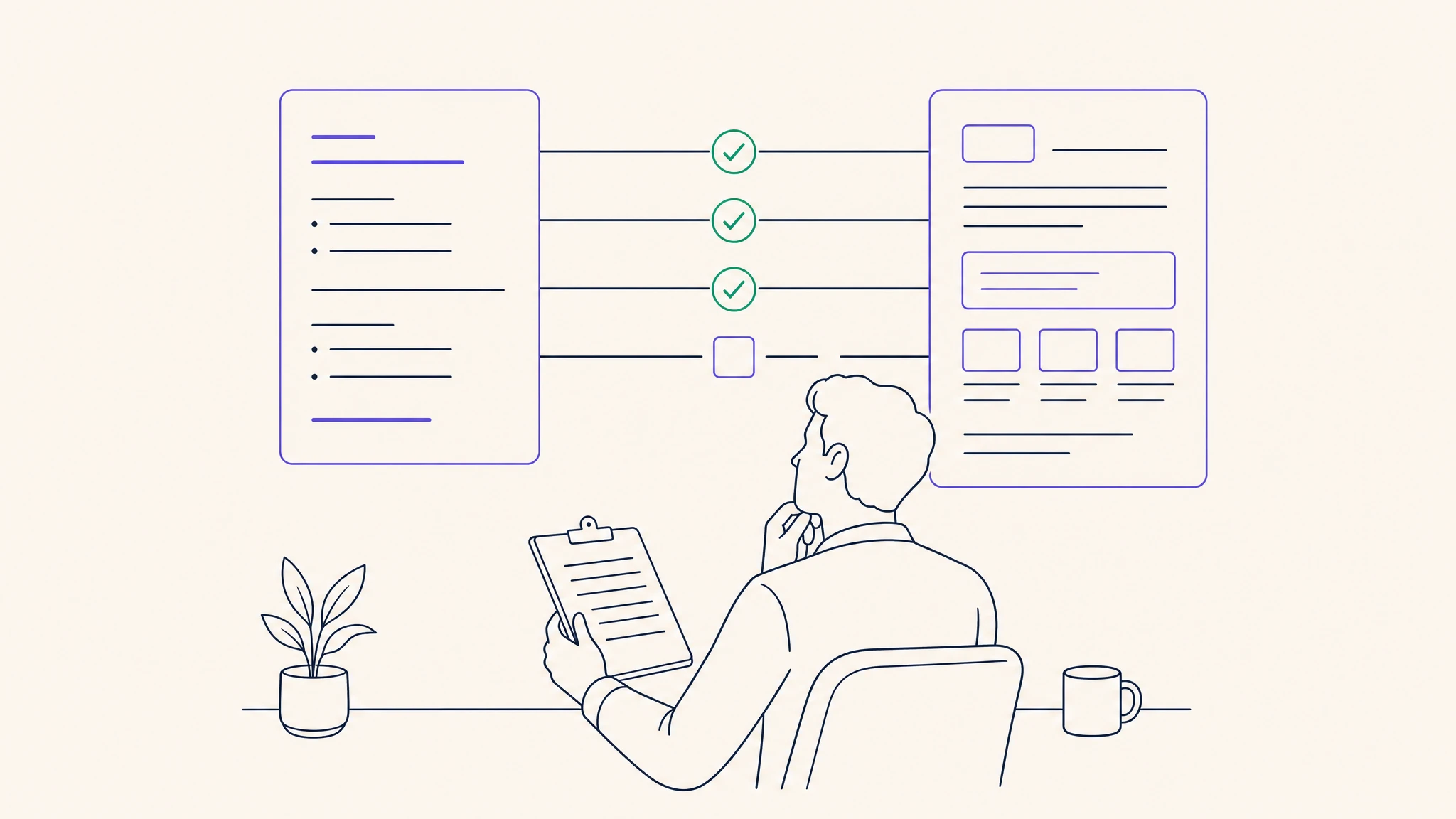
1. Use a guest post supplier checklist to complete the quote
Ask about one opportunity at a time. A supplier may offer several domains or both placement formats, with different prices and conditions for each. Record the exact offer you are discussing.
| Question to ask | Confirmation to keep | Pause if… |
|---|---|---|
| Which site and placement format does this quote cover? | Exact domain; new Guest Post or Link Insertion; proposed section or existing article | The supplier can change the site or format without asking |
| How are you authorized to arrange this publication? | Direct publisher relationship or authorized reseller explanation, with supporting evidence where available | Only a domain list or DR screenshot is offered as proof |
| Has the subject been accepted in principle? | Intended readers, proposed angle and section; any restricted subjects | Approval depends on a different subject from the one you need |
| What are the editorial requirements? | Length, language, originality rules, AI-content policy, byline and draft-approval process | The supplier expects a finished draft before explaining the rules |
| What link will appear, and where? | Target URL, anchor, surrounding context, number of links and actual rel attributes | The answer is only “SEO link” or “standard link” |
| What is the total price, and who receives payment? | Currency, included work, extra charges, invoice/payee and payment schedule | Writing, revisions or another fee remain unspecified |
| When does the publication deadline start? | A date or lead time, starting event and delay procedure | “Seven days” has no starting point |
| What will count as delivered? | Live article URL and agreed content/link checks; any indexing condition stated separately | A screenshot alone substitutes for an accessible publication |
| What happens if the placement changes or disappears? | Correction/removal window, responsible contact and agreed remedy | “Permanent” is the entire answer |
An unanswered question is a reason to clarify the offer. It is not, by itself, proof that the supplier or website is fraudulent. Prioritize the gaps that would change your decision to pay.
2. Confirm publisher permission and editorial fit
The supplier is the party making the offer. The publisher controls the website's editorial decisions. Sometimes they are the same business; sometimes a supplier resells access through a publisher relationship.
A reseller can be a workable contact. Ask who obtains approval, who handles revisions and who remains responsible for the promised delivery. You need a clear route to the publisher's decision, even when the supplier manages that communication.
Request a recent, comparable live article and an explanation of how the proposed placement will be approved. When appropriate, ask for a redacted publisher confirmation or verify the arrangement through a public editorial contact. An old published example shows that an article exists; it does not prove current authorization. Do not request passwords or access to the publisher's account.
Also confirm what “guest post” means in this offer: an original editorial article, a sponsored contribution or a press-release repost. For Link Insertion, obtain the exact existing article and proposed paragraph change. The Guest Post and Link Insertion comparison explains why the deliverables differ.
If a page cannot be read automatically, record that limitation and inspect available evidence. A failed fetch does not establish poor quality or settle the permission question.
3. Agree on price, link terms and a delivery deadline
Separate the supplier's placement fee from writing, images, editorial changes and any platform charge. Ask which work you supply and which work the guest post provider supplies. If a draft is rejected, does the original price include a revision, another pitch or neither? The guest post pricing guide provides a way to compare these cost components.
Confirm the payment recipient and invoice details. If the recipient differs from the supplier's business name, ask for an explanation before sending money. Record the currency, payment milestone and any agreed cancellation or non-delivery terms. A written confirmation improves the record; it does not guarantee recovery of a payment.
For links, specify the destination, anchor and article context. Ask for the actual HTML rel values. “Dofollow” is commonly used to describe a link without qualifying attributes; the label alone tells you little about the final markup.
Google's outbound-link guidance prefers sponsored for paid placements and also accepts nofollow. Its link-spam policy addresses links bought or sold for ranking purposes. Confirm appropriate paid-link treatment rather than assuming a paid, unqualified link is a safe way to improve rankings. A visible sponsorship label and an HTML link attribute are separate details to check.
Finally, define timing. “Within seven business days after editorial approval” is clearer than “seven days.” Note who supplies the approved draft, when the clock starts, how delays are reported and what happens if the date is missed.
Treat publication and Google indexing as separate events. A live page can exist before it appears in search. Google's recrawl documentation says a crawl request does not guarantee inclusion. If indexing is part of a commercial promise, ask how it is measured, by when and what remedy is offered. No supplier controls Google's indexing decision.
4. Decide how corrections and removals will be handled
Ask the supplier to replace “permanent” with specific retention and remedy terms. A site can change ownership, edit an article or stop operating. An indefinite assurance does not explain who will help when that happens.
Agree how long the supplier will handle an incorrect target, changed anchor, removed link or missing article. State when the response window starts, what evidence you should send and what exclusions apply. Distinguish the time allowed to acknowledge a problem from the time allowed to fix it.
Then discuss the remedy: correcting the original page, an alternative placement you approve, or a refund under the supplier's stated terms. These are negotiation points, not benefits you should assume every offer includes. A different domain with a similar DR may still have a different audience and editorial fit.
Require approval before changing the domain, placement format, destination or agreed link treatment. Retain the updated confirmation if you accept a change.
5. Send one confirmation and check the reply
Use this English follow-up in the same thread as the specific quote. It is a confirmation request, not a cold outreach pitch. Attach your proposed topic and target page privately where needed.
Thanks for the quote. Before we confirm this placement and arrange payment, please reply to the following points for the offer in this thread:
- Confirm the exact publishing domain, Guest Post or Link Insertion format, and intended section or existing article.
- Explain your relationship with the publisher and how approval will be obtained. Please share a recent comparable live example and any available confirmation of authorization.
- Confirm that our topic and target page are acceptable in principle. Send the editorial requirements, including length, language, AI-content rules, byline and draft approval.
- Confirm the target link, anchor, placement context and actual link attributes, including paid-placement disclosure.
- Confirm the total price, currency, included writing/revisions, extra charges, payment recipient and payment schedule.
- State the publication lead time, when it starts, and the process for delays or non-delivery.
- Confirm that you will provide the live article URL. State any indexing commitment separately, with its checking date and remedy.
- Explain the correction and removal terms: coverage period, response time, exclusions, and agreed correction, replacement or refund process.
Please ask for our approval before changing the site or agreed placement terms. Once these details are settled, we can confirm the scope and prepare the content.
Read the reply against the questions, rather than treating “yes” as agreement to everything. These fictional examples illustrate the distinction:
| Supplier reply | What still needs attention |
|---|---|
| “Yes, guest post, permanent, everything included.” | Permission, editorial rules, link attributes, timing and the remedy remain unclear |
| “The publisher accepts the topic. Send the finished article first; we will quote afterward.” | Get the requirements and price scope before commissioning a full draft |
| “Placement only; buyer supplies the approved draft; publication within seven business days of approval. We will return the live URL and use the agreed sponsored link.” | Useful scope and timing, but permission evidence, payment details and correction/removal terms still need answers |
If the supplier gives a partial answer, send a short follow-up naming the remaining points. Pause payment when the unresolved item affects authorization, cost or an essential delivery condition. Decline the offer if the final terms do not meet your requirements.
If the quote is unclear because the original request was vague, use the guest post brief template to restate the requirements before asking for a revised proposal.
6. Save the terms before commissioning content
Keep the quote, final confirmation, approved brief and payment record together. Use that record when checking the live URL, destination, anchor, link attributes and article content. It also gives you something specific to reference if delivery differs.
In Linkquire, unlocking a proposal provides the full assessment, supplier contact and content-plan entitlement. You still agree terms and pay the supplier directly. After agreeing cooperation, record the placement engagement and delivery requirements; the buyer guide explains that workflow. The platform assessment does not certify publishing permission or guarantee the supplier's performance.
Before sending the next payment, choose the unanswered item most likely to change your decision and ask it plainly. Prepare the full article once the publisher, scope and approval process are clear.